


Industry executives who described insurance and reinsurance markets as “rational” in the not-so-distant past are now using words like “dumb” and “bizarre” to characterize soft-market competitor moves happening faster than expected, and in unusual places.
W. Robert Berkley, Jr., chief executive officer and president of W.R. Berkley Corporation, began his opening remarks on a first-quarter earnings call last week by highlighting “a notable shift in the appetite of the standard market” over the past 90 days. In particular, national carriers seem to be broadening their appetite, he said, juxtaposing this observation against remarks he made in recent prior quarters about competition coming from MGAs, MGUs鈥攅ntities with delegated authority鈥攂acked by capacity from the reinsurance market and from Lloyd’s.
Related:
Competition from standard markets have “reached a new level鈥� that we haven’t seen in some number of years,” Berkley stated, adding, however, that it “tends to be focused in certain pockets.”
Which ones?
“They are active on the property side. And to the extent that it’s on the casualty side, ironically, it’s been in pockets of the casualty market that are OK but not great,” he responded to an analyst later asking for this detail. “It’s really bizarre. They’re not going after the good stuff. They’re going after the marginal stuff,” he said of the standard national carriers.
Even more “bizarre” in Berkley’s view: “In some cases, they’re taking it for 30% off, [when] they could have had it for 10% off,” he said.
A day later, Evan Greenberg, chair and CEO of Chubb, said he wasn’t seeing exactly the same picture of admitted markets competing on E&S business but wouldn’t be surprised to see more of it. “It’s a classic pattern in softening market. Where I’m seeing it is more on the margin on the property side鈥攔etail that will all of a sudden get so excited to write habitational wood-frame business in Texas.”
“OK. Good luck to you,” he commented.
Many of Greenberg’s remarks were more focused on MGAs incented on volume that are impacting the property insurance market鈥攑articularly large-account shared-and-layered property, retail and wholesale in North America and wholesale in London, which Chubb has been moving away from because of irrational competition.
Related: ‘The Arms Race Is On’: Chubb’s Greenberg on Mythos, Middle East | Chubb Q1 Net Income Increases 74% on Fewer Catastrophe Losses
Chubb’s leader began his conference call commentary with a broad overview statement alluding to this: “In a number of important markets, property and financial lines pricing conditions are soft, with property pricing in those markets softening at a pace that, frankly, I’ll only describe as dumb.”
He went on to highlight Chubb’s top-line growth figures, with and without large account shared-and-layered property business. Chubb shrunk that business, he said, noting, for example, that “major accounts retail and E&S wholesale” premiums in North America grew just 1.5% in the first quarter鈥攂ut it jumped by 10.9, excluding the shared-and-layered property accounts shed in the quarter.
“Going a step further, property pricing was down 14.3% on shared-and-layered major [accounts] business [that] we wrote. Market pricing for the business we gave up or passed on was down between 30% and 40%….
“On the other hand, in Middle Market and Small Commercial, property pricing was up 1.5%,” Greenberg noted.
“The larger the premium, the greater the price discount,” he said, later reporting that that Chubb shed half of its E&S commercial property volume for the quarter. “And by the way, that half the volume we shed, most of it was because we walked away,” he said.
Asked specifically to explain what’s causing the level of large-account competition, Greenberg said, “It’s always supply/demand. It’s the amount of supply, which is capital that is chasing a relatively finite amount of business鈥�.”
“The structural difference this time is simply how the capital is showing up”鈥攎uch of it “in a volume-based incentive system,” he said, calling out MGAs specifically.
“What do they bring? They bring a cheaper price and a higher commission,” he said.
“And it’s the reinsurance market, and it’s alternative capital,” he said, referring to the breadth of supply. “And the number of bites of the apple in the supply chain taken by intermediation. That is what you are reflecting here,” he said, offering a highly condensed version of a longer discussion included in Greenberg’s letter to shareholders in Chubb’s 2025 annual report which filled in more details.
Reinsurers and insurers who support MGAs are making “a bad bet,” he wrote in the letter. “As agents, they don’t retain underwriting risk. Instead, for a commission, they bind others鈥攊nsurers, reinsurers, hedge funds, private equity鈥� to risk gathered from retail and wholesale brokers who generally do business with them because they offer cheaper prices and good commissions.”
He went on to describe “four or five layers of intermediaries” that are part of a “volume-based incentive system that amplifies the supply cycle,” including brokers taking commissions from fronting carriers (who take fees) and “broker underwriting facilities” through which brokers “lay off coverage automatically to insurers for additional commission.”
[A]ll of these intermediaries make their money through commission dollars, which are a function of volume. The clear losers are the ultimate risk takers,” he wrote, referring to business taken at “cheap prices with huge intermediation costs.”
During the earnings call, Greenberg noted that because this system is now operating on short-tail business, “the report card” will come quickly. “Stay tuned,” he said.
At one point, he noted that loss costs are moving up at 4-5% on shared and layered property. “You can work out the math there,” he commented.
Reinsurers Lead the Way Down
During the W.R. Berkley call, Berkley drew attention to the speed of softening in the property and property-catastrophe reinsurance market. “It has been more and more competitive. We’re not surprised with it directionally but we have been taken aback a bit by the pace of change and how that level of competition has really taken hold at an accelerating pace.”
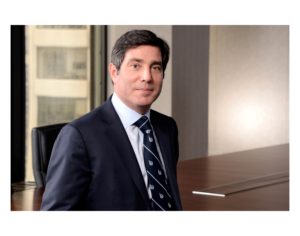 “We’re not surprised with it directionally but we have been taken aback a bit by the pace of change and how that level of competition has really taken hold at an accelerating pace.”
W. Robert Berkley, Jr.
“We’re not surprised with it directionally but we have been taken aback a bit by the pace of change and how that level of competition has really taken hold at an accelerating pace.”
W. Robert Berkley, Jr.
Casualty reinsurance is problematic as well, he suggested. “The liability market within the reinsurance space never seemed to have gotten much of the bounce that we saw in the property market. Nevertheless, it remains very competitive. And we remain concerned for the health and well-being of that marketplace over time, as there is more competition in the property market that will undoubtedly, at least history would suggest, create more irrational behavior that will be plentiful in both the property-cat market as well as the liability market.”
Extending his commentary to the insurance side of the business, Berkley said the catastrophe-exposed property insurance marketplace is quickly eroding. While rate remains available in general liability and umbrella insurance lines, D&O “seems to be continuing to flirt with the bottom,” Berkley noted.
Asked specifically about the current adequacy of pricing in the property market, Berkley said, “There’s still margin in a lot of places, but it’s fallen off pretty quickly”鈥攎ost quickly in the reinsurance marketplace. “Then it would waterfall down into cat-exposed or E&S property.”
“Probably the place where there’s been the least level of sea change would be the admitted or standard risk property market overall. That having been said, that part of the market probably got the least bounce.”
He concluded: “In my mind, the reinsurance market led the way up and the reinsurance market is leading the way down.”
 When “you go to a dumb place pretty quick, then the reaction the other way ought to be quicker.”
Evan Greenberg, Chubb
When “you go to a dumb place pretty quick, then the reaction the other way ought to be quicker.”
Evan Greenberg, Chubb
On the Chubb call, an analyst asked Greenberg whether the steep pace the property pricing decline might mean that the soft cycle will be short-lived.
Noting that property pricing encompasses attritional and cat losses, he said, “I haven’t noticed a diminution in the attritional loss environment. That’s pretty steady鈥�.And on the cat side, well, unless you believe that the models are wrong, or that somehow the climate environment is going to change or has changed and is going to become something other than what it has been, then we have inadequate pricing. And inadequate pricing in property tends to reveal itself pretty quickly,” he said.
“The only way out for capital providers at that point is to adjust pricing and to ensure they got the right terms and conditions.
“So, generally, in my mind, [if] you go to a dumb place pretty quick, then the reaction the other way ought to be quicker,” he concluded.
In between the two conference calls, Marsh published its for the first quarter, reporting that property insurance rates declined by 9% globally鈥攖he identical average rate decline reported in fourth-quarter 2025, with 10% drops for the U.S. and the UK.
Casualty rates increased 3% globally, down from a 4% increase in Q4, according to the report, which also said the first-quarter’s increase was driven by a second consecutive increase of 9% in the U.S. “Casualty rates declined in every other region in Q1, particularly for companies without U.S. exposures,” Marsh reported.
Was this article valuable?
Here are more articles you may enjoy.
 NAIC Victim of Cyber Incident Via PeopleSoft System
  Mississippi Insurance Dept. Top Examiner Named in $90M Credit Union Theft Suit
  IMA Latest to Sue Howden Over Alleged Employee Poaching
  US P/C Rebounds to Post Q1 Underwriting Gain; Net Income Doubles


